CANFD-ROV-PWM (DroneCAN Thruster controller) NEW
SKU: 1631
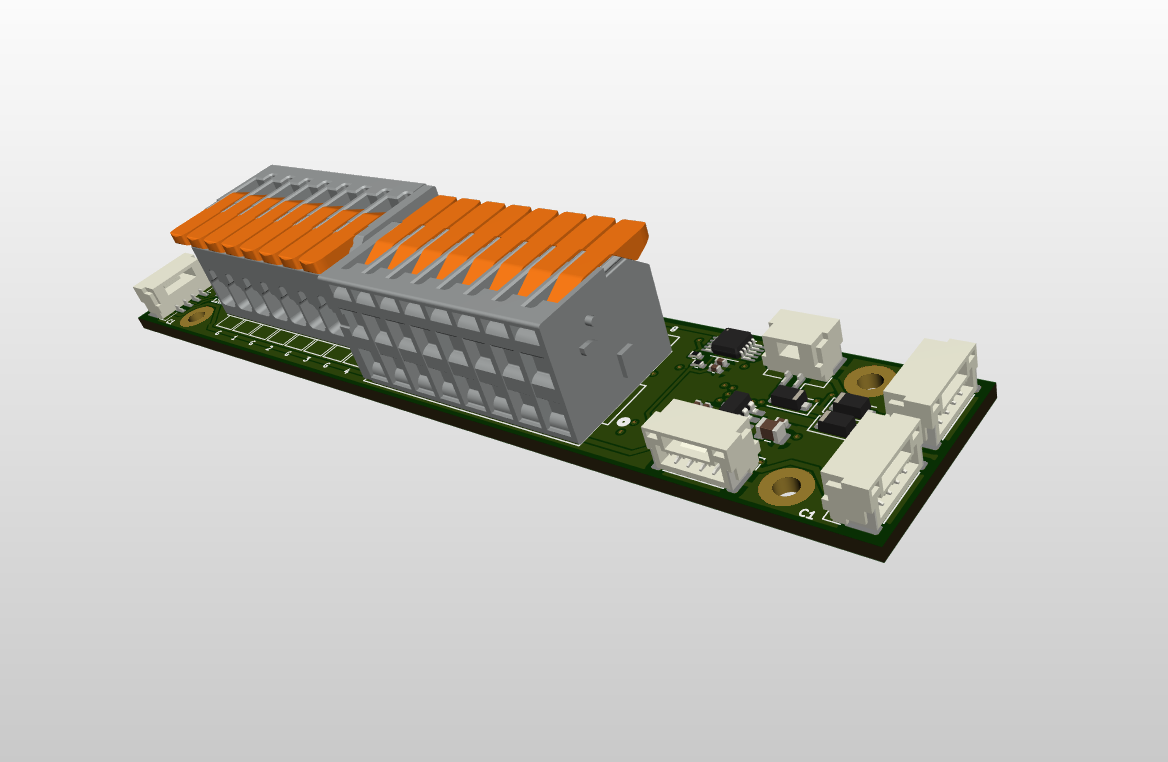
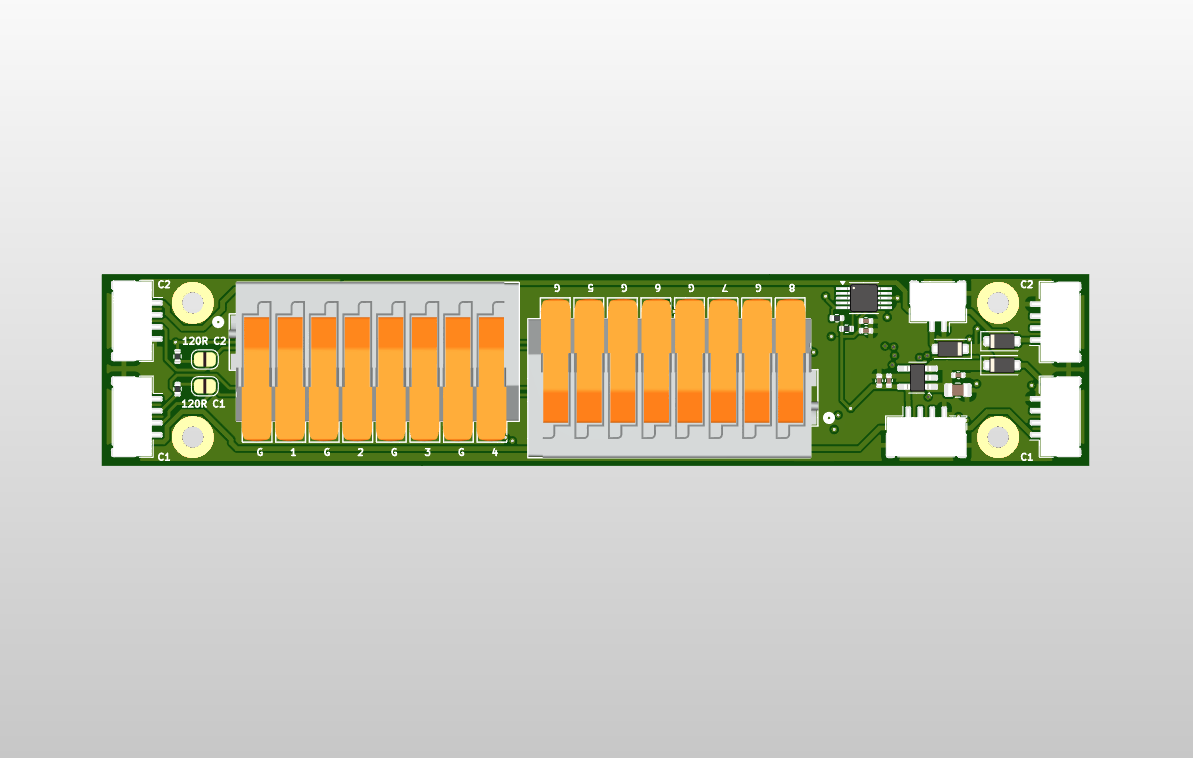
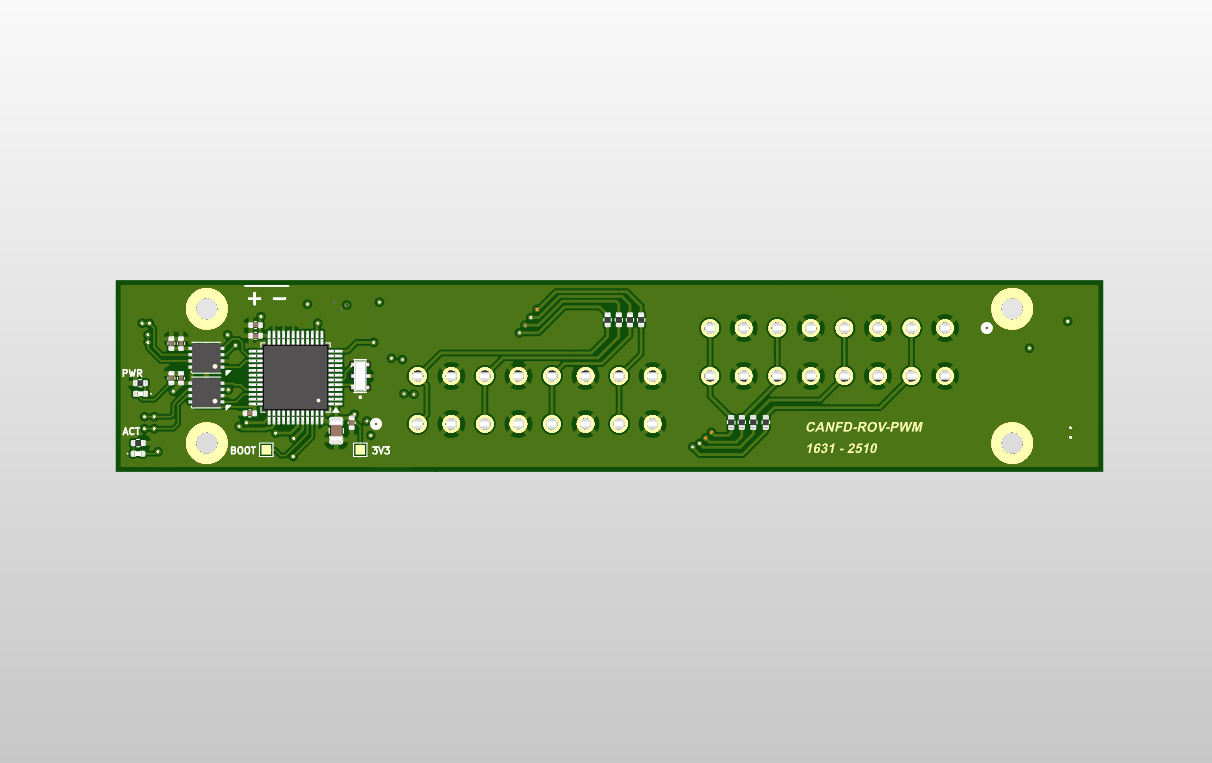
Compact DroneCAN expansion module that supports up to 8x ROV thruster ESCs, connected with vibration resistant and easy to operate WAGO terminal blocks. Supports battery voltage monitoring, configurable node ID and data rate up to 5 Mbps, with PX4/Ardupilot-compatible pinout. Designed to fit into small ROVs with tubular frames from 50mm diameter.
- Excellent serviceability with no soldering required. Plug-and-play installation and replacement
- Vibration resistant architecture
- Two independent CAN-FD ports with two connectors each for redundancy and daisy-chaining
- Compatible with CAN classic (1Mbps) and CAN-FD networks
- PWM and DSHOT support for up to 8x ROV thruster ESCs
- Compact form factor: 100mm x 20mm
- Arm® Cortex®-M4 @ 170MHz
- 1x UART expansion ports
- Battery voltage monitoring (VSENSE)
- Can be controlled by our AZIMARIK Autopilot or other DroneCAN compatible autopilots
- Supports DroneCAN protocol with configurable data rates and node ID
- PX4/Ardupilot/Pixhawk compatible CAN pinout and power supply
We offer an optional ESD shield for this module, to be used in environments with high electrical noise.
This product is not an independently functional unit and DOES REQUIRE professional installation and configuration.
Regulatory and compliance duties must be performed by the system integrator.
Proper installation of this component requires that it be positioned and secured in a manner that completely prevents physical or electrical contact with any other electrical devices, wiring, or sensitive components within the vehicle. This includes maintaining adequate clearance from conductive surfaces and heat sources. It is the explicit responsibility of the vehicle designer or integrator to verify that all installation conditions comply with applicable safety standards, electrical regulations, and manufacturer guidelines. This verification should include careful routing of wiring harnesses, use of appropriate mounting hardware and insulation materials, and confirmation that the component remains isolated under all expected operating conditions, including mechanical shocks, thermal expansion, and electrical transients.
Not intended for use in manned systems.
* The appearance and design of the module are subject to changes. The functionality always remain unchanged.